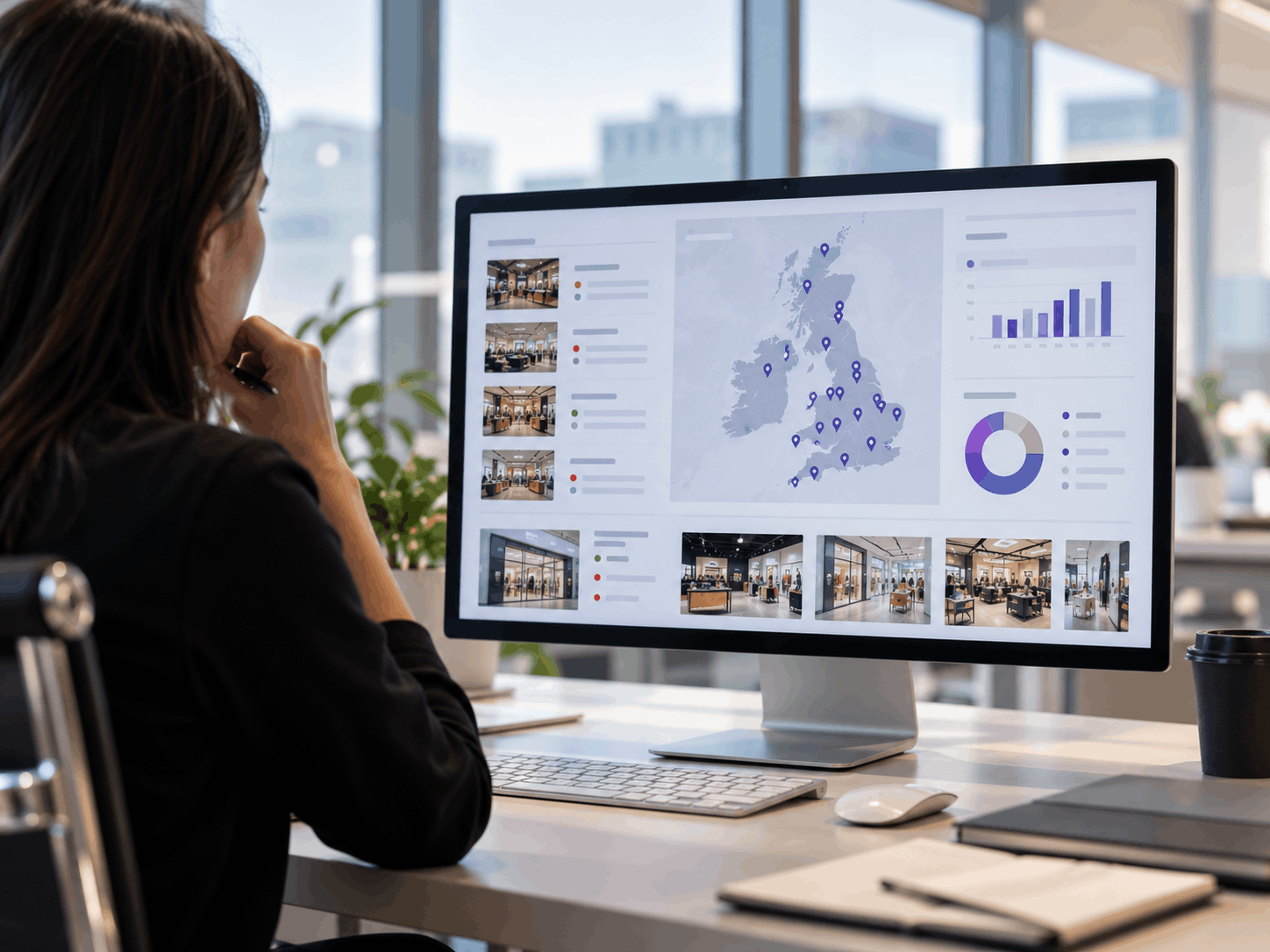
Retail intelligence gets talked about as if it's a dashboard problem, get the right charts in front of the right people, and visibility follows. At any real scale, that's backwards. The dashboard is the easy part. What determines whether retail analytics software delivers anything useful is what happens underneath it, whether the data reaching that dashboard is complete, accurate, and coming from a consistent process across every store, region, and team feeding into it.
Why retail intelligence breaks down before it reaches the dashboard
Most retailers already collect plenty of data. Store visits get logged, compliance gets checked, issues get flagged. The problem isn't a lack of information, it's what happens to that information between the point it's captured and the point someone tries to act on it.
Spread that process across multiple teams, agencies, regions and reporting formats, and small inconsistencies compound fast. A spreadsheet from one region doesn't match the format from another. A field agent uploads a report that's missing half its fields. By the time everything reaches a central view, someone has usually spent hours reconciling data that should have been consistent from the start.
That reconciliation work is invisible in most retail analytics conversations, but it's often the real bottleneck. A retailer can invest in leading retail analytics software and still get poor retail intelligence out of it, because the software was never the constraint. The data feeding it was.
What a connected retail intelligence platform needs to solve
Genuine retail intelligence at scale needs to get a handful of things right before analytics becomes useful at all.
Structured data capture, not free-form reporting
Field teams and agencies need a consistent way to submit information, whether that's a guided survey journey or a structured upload, so what comes in is comparable across stores rather than a patchwork of formats.
Validation at the point of entry
Catching an incomplete or inconsistent submission when it's entered is far cheaper than catching it after it's already been aggregated into a report someone is relying on.
Role-based visibility across a distributed network
A field agent, a regional manager, and a head office analyst need different views of the same underlying data, not separate systems that all reach slightly different conclusions.
Audit trails that create real accountability
When data quality genuinely matters, being able to trace who submitted what, when, and from where isn't optional, it's what makes the reporting trustworthy in the first place.
Case study: Meta's global retail intelligence platform
Meta's retail operations needed exactly this kind of foundation. Before a centralised platform was in place, compliance tracking, field reporting and store data were fragmented across multiple teams, agencies, and locations, making it genuinely difficult to maintain real-time visibility or trust that reporting was accurate.
The platform built to solve this brought compliance tracking, survey management, store and fixture data, issue reporting and analytics into one connected system, with structured survey journeys for field teams, bulk upload support, and validation built in at the point of submission rather than after the fact.
The scale involved makes the data quality challenge concrete. The platform now runs across more than 3,000 stores in production worldwide, with over 330 active users spanning Meta's own teams and agency partners. It has supported 15,000 compliance and installation surveys and captured 495,000 structured survey data points, all of it comparable and usable because the structure was consistent from the point of entry.
The clearest result is the data quality improvement itself: a 94.5% reduction in upload errors. That single figure captures what retail intelligence is solving for. Not more data, cleaner data, submitted consistently enough to be trusted the moment it lands.
What Meta needed | How the platform addressed it |
Fragmented reporting across teams and agencies | Centralised platform bringing compliance, surveys, and issues into one system |
Inconsistent, error-prone data submissions | Structured survey journeys plus validation at point of entry |
Limited visibility into store-level performance | Real-time dashboards with role-based access by store, region, and channel |
Difficulty acting on retail data | Audit logging and structured validation supporting faster, more confident decisions |
Why data quality determines everything downstream
Once structured, validated data is flowing consistently, the analytics layer becomes far more valuable. Real-time dashboards can be trusted to reflect what's happening in the retail network, rather than a snapshot filtered through days of manual reconciliation. Teams can move from reactive reporting, finding out about a problem after it's already affected performance, to spotting recurring issues while they're still small enough to fix efficiently.
This is the part retail analytics software vendors don't always lead with. A polished dashboard built on inconsistent underlying data risks producing polished, unreliable conclusions. The unglamorous work of structured capture and validation is what makes everything built on top of it worth looking at.
Retail analytics solutions are only as good as the data feeding them, and retail store analytics only becomes reliable once reporting is consistent across every location.
If it's worth talking through what retail intelligence could look like across your own store network, get in touch with Merlin Cloud.
Related reading
See how retail analytics turns store-level activity into usable reporting, or read the full Meta Global Retail Intelligence Platform case study.