Most exhibitors leave an event with a pile of badge scans, a few business cards and a vague memory of who was interested. The names are there, but the reasons are not, and a follow-up email that could have been sent to anyone tends to get treated that way.
Good event lead capture works the other way round. It gives visitors a reason to share their details, records what they cared about while they were standing in front of you, and leaves your team with something specific to say afterwards. This guide sets out how to do that at a trade show, expo or business event, using real campaigns from Merlin Cloud.
What is event lead capture?
Event lead capture is the process of collecting contact details from people you meet at an event, together with enough context to follow up properly. At its simplest it is a badge scanner or a sign-up sheet. At its best it is built into something visitors choose to do, such as a game, a quiz or a prize draw, so that sharing details feels like part of the experience and not a form standing between them and the next stand.
The aim of trade show lead capture is not the longest list, but a list your team can actually act on, and the same thinking applies to lead capture for events of any size.
Decide what you need to know before the event
Before choosing a tool, decide what a useful lead looks like for your business. A name and email address is the minimum, but a sales team will usually want to know what the visitor was interested in, how soon they might buy and who else is involved. Each extra question costs you some completions, so ask only for what your follow-up will use. If the experience itself can reveal interest, as a product finder or a venue guide does, you can learn more without adding a single field to the form.
Give visitors a good reason to hand over their details
People share their details when they get something back. A prize draw, a personalised result or a branded photo all give visitors a clear exchange, and a game or quiz makes the exchange feel like part of the fun.
At Seawork Expo, Sona Insurance turned its stand into a penalty shootout with a live leaderboard and a daily prize of an England shirt. The stand captured 163 leads in two days at an expo attended by 7,972 industry visitors, and the leaderboard brought people back to improve their score.
When Houchins launched its corporate events offer to local businesses, a locally themed quiz with a glamping getaway as the prize collected more than 60 contact details. You can read both in the Sona Insurance case study and the Houchins case study. For ideas on which games work best on a stand, see our guide to exhibition stand games, and for the wider list of formats, our guide to interactive exhibition stand ideas.
Keep the form short and let the phone do the work
A long queue at a stand puts people off, so the capture step has to be quick. Typing on a shared screen in a crowded hall is slow, which is why many experiences hand the entry over to the visitor's own phone.
A QR code on the screen or the stand lets someone scan, play or enter on their own device, and the same code can sit on a leaflet or a poster so people can take part from further away.
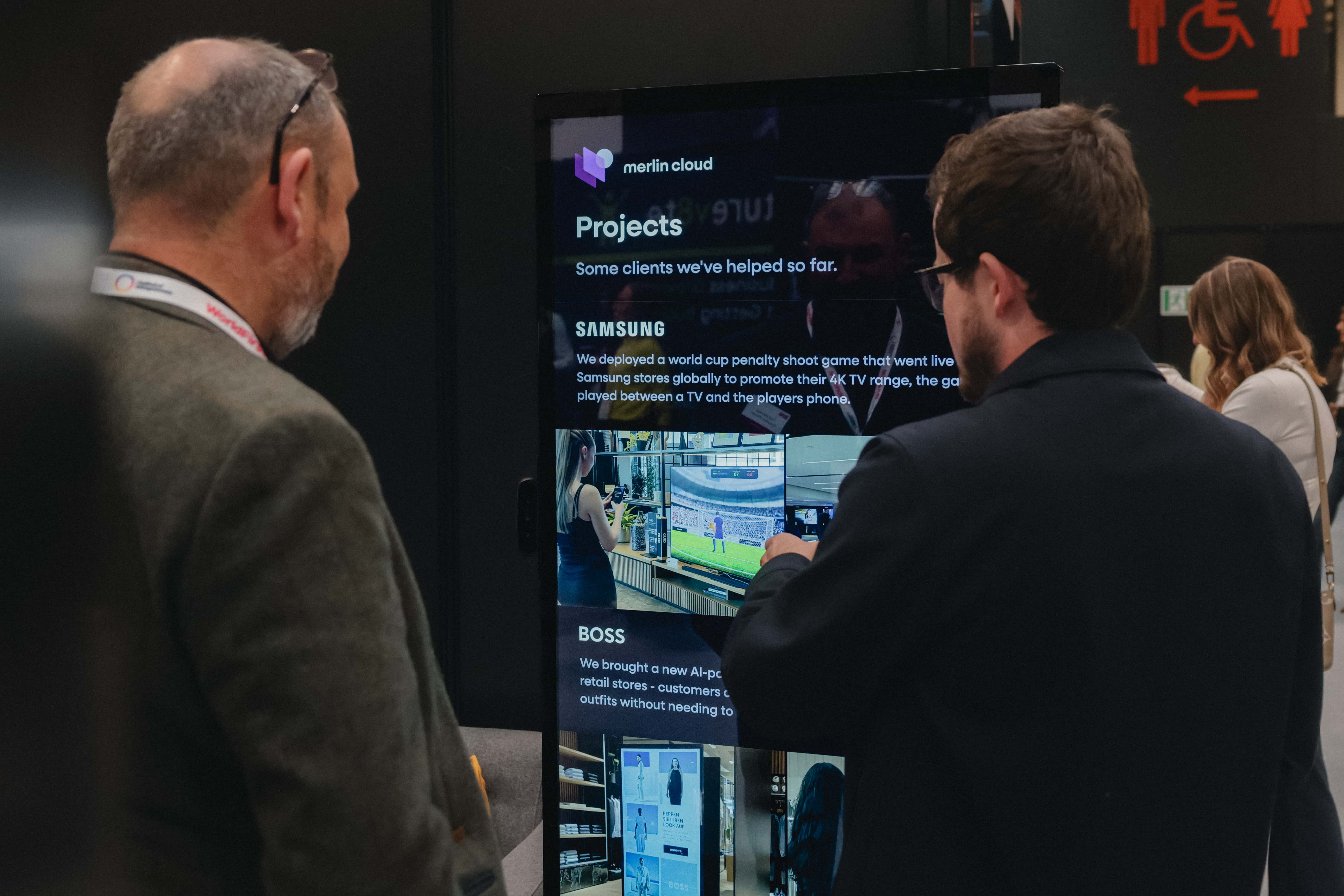
Samsung used this approach for its World Cup penalty shootout across 120 stores, with players using their phones, a leaderboard and a prize draw that collected opted-in details, as described in the Samsung case study. Merlin Cloud's Smart QR Codes can similarly connect visitors to an interactive experience on their own phones.
Capture what they were interested in, not just who they are
The most useful part of a lead is often the context. Oner Active's pop-up recorded outfit preferences through its Fashion Match experience alongside opted-in contact details, so the brand knew what each visitor liked as well as who they were, as the Oner Active case study explains.
Houchins used a freestanding touchscreen kiosk to let guests explore spaces and hosting options, and each interaction showed the team what a guest cared about, giving them a natural opening for a conversation. An interactive kiosk can do the same job on your stand, leaving a record of interest without anyone filling in a longer form.
Follow up while the stand is still fresh in their mind
Leads are easiest to follow up while the event is fresh, so plan the follow-up before you arrive. Sort contacts by what they showed interest in, and write the first message so that it refers to it, whether that was a particular product, a quiz answer or a score on your leaderboard.
A message that mentions something the visitor remembers will feel more relevant than a general newsletter. Where a prize was involved, announce the winner promptly, since that is also a natural reason to get in touch.
Stay on the right side of data protection
If you collect contact details at an event, tell people plainly what you will use them for, and make marketing opt-in rather than assumed.
The ICO's guidance on direct marketing and electronic communications sets out what UK organisations need to do. It is worth reading before you put a sign-up on your stand, because the wording of the entry screen is the easiest place to get it right.
How Merlin Cloud supports event lead capture
Merlin Cloud builds interactive experiences such as games, quizzes and product finders that run on a kiosk or on the visitor's own phone, and that collect opted-in details as part of the experience.
Most deployments start from a Merlin Cloud template tailored to your brand, so a conversation about your next event usually begins with what you need to learn from visitors rather than a blank page. If you would like to talk through what that could look like, get in touch.
Related reading
Read more about interactive kiosks, browse the Sona Insurance case study, or see our guide to product launch ideas.