Most product launches follow the same pattern. There is a reveal, a rush of attention, and then everyone goes home without the team knowing who turned up or what they thought. The better product launch ideas give guests something to do and something to win, so the launch keeps working long after the doors close.
This guide sets out six interactive new product launch ideas for shops and events, each tied to a real Merlin Cloud campaign so you can see what happened when it ran.
What makes a good product launch idea?
A good launch idea gives people a reason to stop and take part, and gives your team a way to learn who they were. Attention on its own fades within the hour. A game score, a quiz result or a branded photo is something a guest remembers and often shares, and an opt-in entry means you can follow up properly afterwards.
The ideas below all work on that principle, whether the launch is in a flagship store, a pop-up or a venue hosting local businesses.
Turn the launch into a game
A simple, familiar game is the quickest way to give people a reason to stop. Samsung's World Cup retail promotion offers a useful model for product launches: customers used their own phones to play a penalty shootout on TV displays in stores. A central leaderboard encouraged repeat plays, a prize draw for an 85-inch Samsung OLED TV collected opted-in contact details, and players were pointed to their local retailer when they finished.
The campaign ran across 120 stores in 21 countries and 15 languages, and 4,399 games were played in store. The case study reports that the promotion contributed to a 14% increase in TV sales across the campaign period.
You can read the full story in the Samsung World Cup game case study, and the games and competitions page shows what else is possible.
Run a quiz with a prize worth entering
A quiz suits launches where you want to start conversations rather than simply attract a crowd. When Houchins introduced its corporate events offer to businesses across Essex, it used a locally themed quiz with questions on sport, Essex and the venue itself. Entrants shared their details for the chance to win an overnight glamping stay for up to six guests, and the quiz collected more than 60 contact details.
The prize mattered as much as the questions. A getaway for up to six guests gave local businesses a good reason to hand over their details, and the questions about Houchins itself kept the venue in front of them while they played.
More on this format is on the quizzes and brand challenges page, and the Houchins case study has the detail.
Let guests explore the new range at their own pace
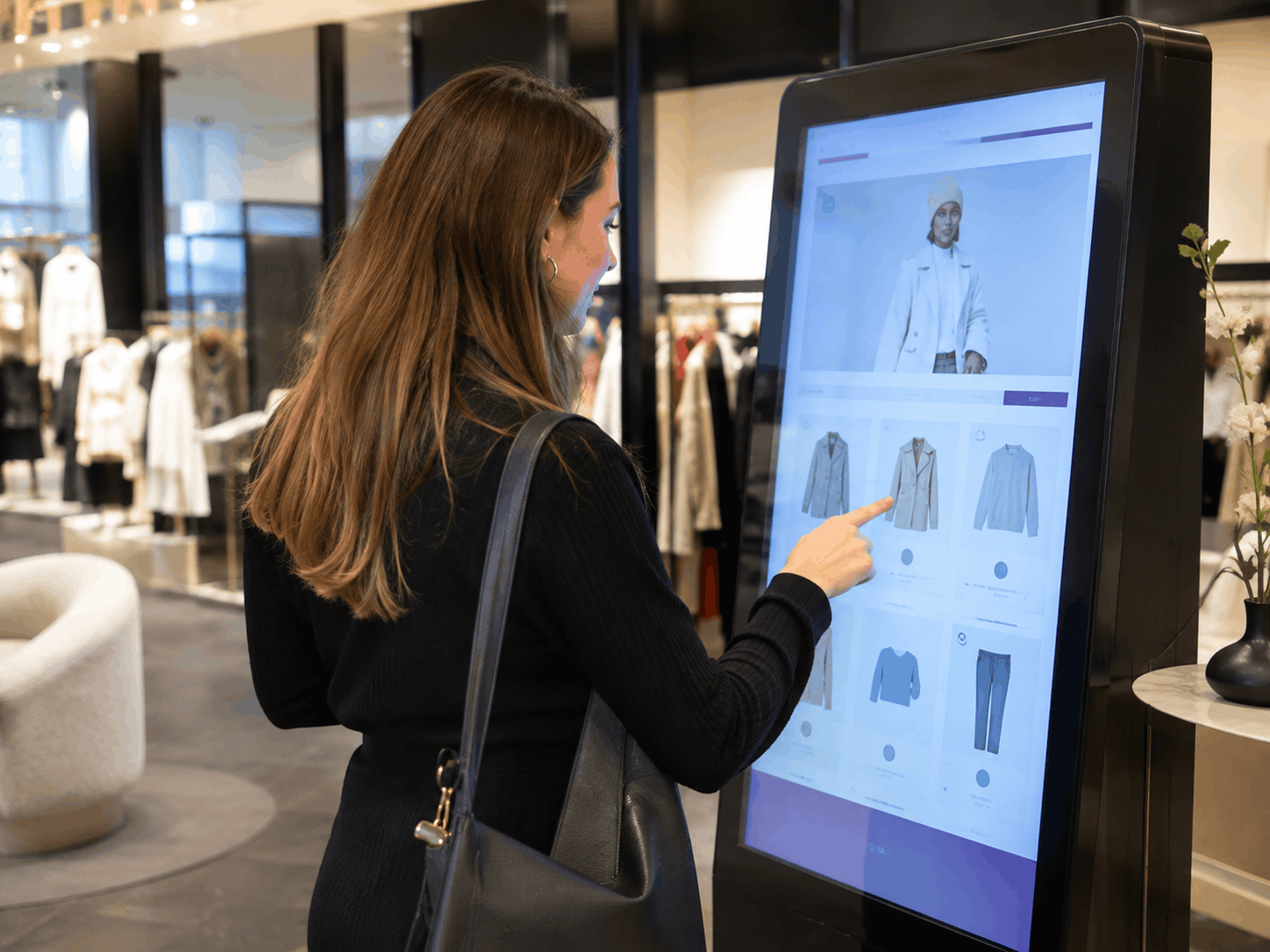
Not everyone wants to play a game. Some guests would rather look around quietly and ask questions when they are ready. Houchins also placed a freestanding touchscreen kiosk at its launch so guests could explore the corporate spaces, hosting options and event possibilities without waiting for a member of staff.
An information kiosk works well beside any new product or service that has several parts to explain. It also gives your team a useful signal, because each interaction shows what a guest was interested in and gives a natural opening for a conversation.
If you are new to the format, our guide to what an interactive kiosk is and what it can do in a retail campaign explains the basics.
Help people find the right product for them
When a launch brings out a new collection or range, product discovery turns browsing into something personal. Oner Active used an experience called Fashion Match at its first New York pop-up, a four-day programme in SoHo, so visitors could explore outfits, colours and combinations and find looks that suited them.
Outfit preferences were captured along the way, together with opted-in contact details, which gave the brand first-party insight into what its community liked.
Product discovery is a strong fit for any launch where the shopper's first question is "which one is right for me?" It also carries on after the launch, since a campaign can be changed to feature the next release. The full account is in the Oner Active case study.
Make the launch shareable with a photo booth
A launch only reaches as far as the people in the room, unless the guests take it further. Oner Active ran Fashion Match during the day and switched to a branded photo booth at night, which kept the pop-up fresh across the programme and turned evening visits into social content. Guests received their branded photo directly, ready to share beyond the store.
A photo booth is one of the simplest ways to get your launch into other people's feeds, whether the launch is in a boutique or at a business event.
Hand the experience to the customer's phone
Several of the ideas above work best when the guest can carry on from their own phone. Samsung's penalty shootout was mobile-controlled, which the case study says kept participation quick, intuitive and social. A QR code is what makes that handover possible, and smart QR codes let you place the same entry point on a shop window, a leaflet, a screen or a stand.
The same code can also work before and after the launch day. Placed on invitations or teaser posters, it gets people involved early, and placed on follow-up emails it brings guests back to the experience.
How to choose between these product launch ideas
Start with the outcome you need most from the launch. If the aim is footfall and attention in shops, a game gives the clearest reason to stop. If you are launching to a room of businesses and want conversations, a quiz paired with a kiosk worked well for Houchins.
If the launch is a new range and you want to learn what people prefer, product discovery and a photo booth give you both preference data and shareable content.
Two practical points apply to all of them. First, if you collect contact details, explain how you'll use them and obtain separate marketing consent where required, rather than treating prize draw entry as permission for promotional emails, in line with the ICO's guidance on direct marketing. Second, if the launch runs in more than one location, plan how the campaign will be scheduled and updated across them, which campaign management is built to handle.
Our guide to interactive exhibition stand ideas covers the same thinking for trade shows and expos.
How Merlin Cloud supports product launches
Merlin Cloud builds interactive experiences for retail and events, from games and quizzes to product discovery and photo booths, and runs them on interactive kiosks or on customers' own phones.
Most deployments start from a Merlin Cloud template tailored to your brand, so a conversation about your next launch usually begins with the goal and the locations rather than a blank page. If you would like to talk through what that could look like, get in touch.
Related reading
Read more about interactive kiosks, explore campaign management, or browse the Samsung World Cup game case study.